- Leana Nordstrom
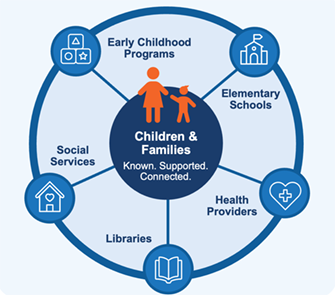
For many families, kindergarten is when the gaps among the systems supporting a young child become impossible to ignore. By then, children may already have relationships with early childhood educators, health providers, libraries, and other community organizations. When those institutions are not connected, families may have to start over, educators...
- David Jacobson
Early-childhood education is ripe for bipartisan support in #edpolicy, writes @jacobsondl. #backpage #earlyedhttps://t.co/5mTM8D1bhG — Education Week Opinion (@EdWeekOpinion) May 10, 2017 I’m pleased to share my commentary in today’s Education Week, “A Purple Agenda for...
- David Jacobson
I have strengthened the language around family engagement and support in the principles for effective P-3 partnerships and the associated theory of action graphic. You will see that I drew on a consolidated version of...
- David Jacobson
In Education Week by Stanford professor Deborah Stipek: “Is fade-out inevitable? No. Studies have shown definitively that investment in preschool can yield sustained effects and significant social and economic returns. But fade-out is common and...
- David Jacobson
A task force of social scientists from Brookings and Duke University has produced a consensus statement on what we know about the effects of pre-kindergarten. Brookings introduces the statement and a report on the current...
- David Jacobson
From today’s New York Times: “As many American parents know, hiring care for young children during the workday is punishingly expensive, costing the typical family about a third of its income. Helping parents pay...
- David Jacobson
As Paul Reville says, “What we actually have now is a felicitous dovetailing of our moral obligations and our economic imperatives.” Here is another case in point countering the idea that all social services discourage...