What Is Playful Learning and Why Does It Matter? Research shows that play is critical to children’s development and learning, especially throughout their early childhood years. Unfortunately, play has gradually been pushed out of classrooms to make time for more teacher-directed learning experiences. Playful learning is often described as having...
While most of the country’s obsessive politics-watchers will be surveying a variety of hotly contested Senate, House, and gubernatorial races on November 4, the early education community will have an eye trained on Seattle, Washington....
In last week’s post I showed how the work of Massachusetts’ Birth—3rd partnerships is “spilling over” in unexpected and promising ways due to the creation of new social and institutional relationships. These spillovers illustrate how...
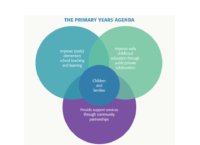
Kappan Magazine has just published an article I wrote , The Primary Years Agenda: Strategies to Guide District Action. I draw on examples from Massachusetts and other states to make the case for three Birth-3rd...
Innovations often evolve out of a series of what may seem to be minor developments. As a consequence, instead of waiting for disruptive products and technologies, we need to create the conditions for individuals, groups,...
From yesterday’s New York Times: It has been nearly 20 years since a landmark education study found that by age 3, children from low-income families have heard 30 million fewer words than more affluent children,...
By the start of middle school, The Afterschool Corp. estimates that children in poverty have received 6,000 fewer hours of learning outside of school—both enrichment and support—than their middle-income peers. While many programs target low-income...
This website uses cookies to improve your experience. We'll assume you're ok with this, but you can opt-out if you wish. Cookie settingsACCEPT
Manage consent
Privacy Overview
This website uses cookies to improve your experience while you navigate through the website. Out of these, the cookies that are categorized as necessary are stored on your browser as they are essential for the working of basic functionalities of the website. We also use third-party cookies that help us analyze and understand how you use this website. These cookies will be stored in your browser only with your consent. You also have the option to opt-out of these cookies. But opting out of some of these cookies may affect your browsing experience. See https://www.edc.org/legal for our full policy.
Necessary cookies are absolutely essential for the website to function properly. This category only includes cookies that ensures basic functionalities and security features of the website. These cookies do not store any personal information.
Any cookies that may not be particularly necessary for the website to function and is used specifically to collect user personal data via analytics, ads, other embedded contents are termed as non-necessary cookies. It is mandatory to procure user consent prior to running these cookies on your website.