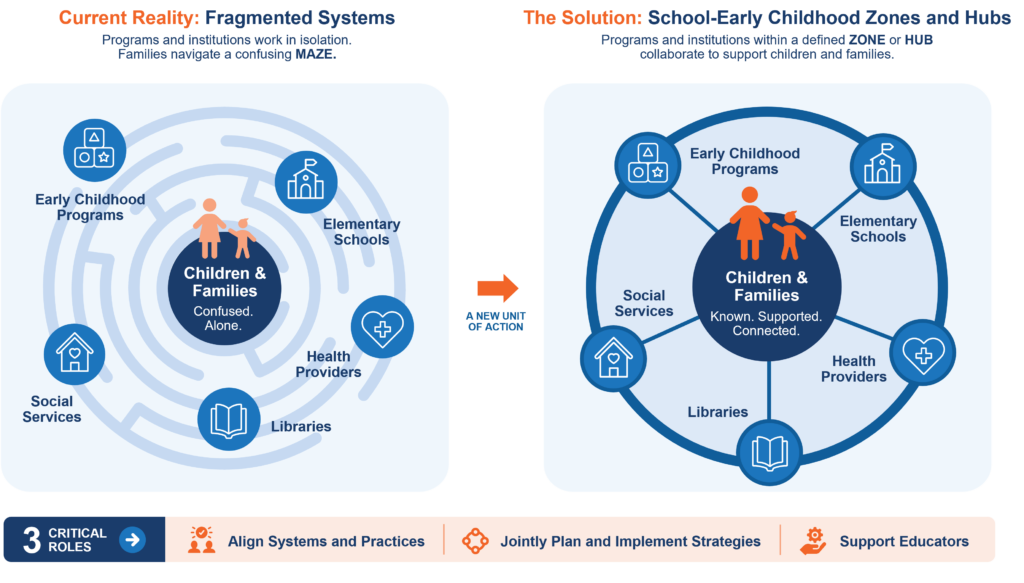


School–early childhood zones and hubs offer a practical, research-based path. To dramatically improve outcomes for children and families, key players need to take coordinated action:
In short: Start early, connect institutions, organize efforts, strengthen communities, and support families so that all children can learn and thrive.
Explore a collection of key introductory resources on First 10 to learn how First 10 works to support school-community partnerships in improving outcomes for thousands of children.
This two-page flyer gives an overview of the First 10 approach to improving outcomes for children ages 0-10.
This evaluation brief by the American Institutes for Research® (AIR®) shares findings from the first year of implementation in Michigan communities. First 10 pilot sites addressed barriers that limit families’ access to school readiness services; aligned pre-K and Kindergarten practices; and improved collaboration among schools, early childhood programs, and community partners; among other successes.